Why I Formed My New Consultancy, Limbic Systems
Last year, I helped a boutique consulting agency save 20+ hours per project and fundamentally change how they sell. I realized our approach and nearly everything we built over that 9-month period could help any service business become AI-native.

In early 2026, I started Limbic Systems to put my decades of expertise to work for businesses looking to invest in safely adopting AI that can generate real, measurable growth and operational efficiency. This isn't theoretical; it's actually working.
the How did I get here?
I partnered with Matter Flow Advisors, a high-growth consulting agency established in 2023 by Wendy Wylde. Their mission is to help law firms capture major revenue opportunities by deploying Wendy's battle-tested, high-performing client intake framework. The deep customization and thorough analysis her team provides for each firm are core reasons her framework repeatedly delivers incredible results for her clients.
I worked closely with Wendy and Travis Corrigan to identify multiple opportunities to systematize and automate laborious aspects of their work across nearly every phase of their delivery pipeline. What came out of that 9-month engagement deserves its own dedicated essay (which we're also writing), but here's what we achieved together:
- 20-hour reduction in average delivery time per project. This allowed the agency to optimize delivery costs, move faster for clients, and produce results that exceeded Wendy's expectations.
- Client audits went from days to hours. We turned the initial (crucial) step in the pipeline into a repeatable process that anyone on staff could complete, fundamentally transforming Wendy's sales process. She could now provide deeply accurate, detailed recommendations almost effortlessly, leading to higher conversions and significant business growth.
- A codified organizational language. The constructs Wendy's staff uses to communicate customized proposals to the build team are now a standard that humans and AI agents alike can quickly understand and evolve. Implementation defects dropped significantly, and the groundwork is laid for agent-based qualification of deliverables (a tedious human step that nobody enjoys).
Once we had a moment to breathe and reflect, a broader thesis came into focus for me:
Surprisingly, very little of what was built was domain-specific. The processes and technology I pioneered for Matter Flow Advisors gave me confidence that I can transform nearly any service-based business into an AI-native agency.
So I founded Limbic Systems to do just that.
The shift is already happening
I don't think I would have arrived at this thesis without more than two decades of riding industry shockwaves and eventually learning to see them coming. I'm also not the only ones who see this. The early signs are hard to ignore. Anthropic recently published Labor market impacts of AI: A new measure and early evidence. It's an interesting read and worth your time. One of the most compelling assertions they make is this diagram that details the theoretical capability and observed usage overlaps by occupational category:
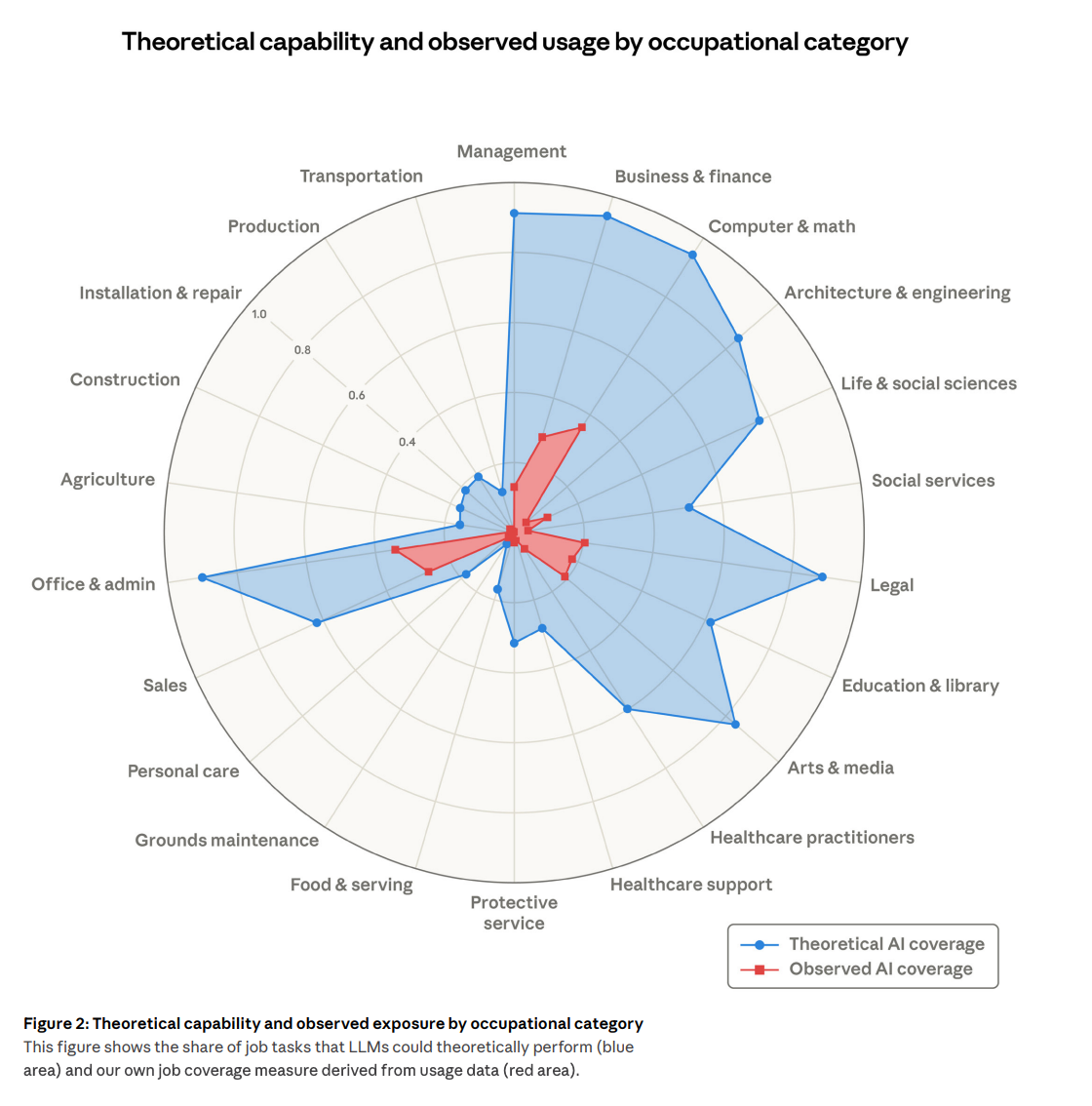
The gap between theoretical capability and actual usage is enormous, and it's not a technology problem. It's a deployment problem. That's the space Limbic operates in. Our approach applies broadly across service-based agencies, though I'm particularly drawn to legal, management, and business & finance.
I've seen this pattern before
I've been building for the web since the late 90s, back when we were doing reckless things with amazing technology. After the first dot-com crash, "Web 2.0" was the first major shockwave I experienced, and I hurried toward it with open arms. Technology had finally caught up with my expectations. Cloud computing followed quickly to meet the demand for rich web applications. And then Steve Jobs unveiled the iPhone.
The era of "Mobile First" (coined by Luke Wroblewski in 2009) swept over the industry like wildfire. Many of the indulgences we committed in the name of Web 2.0 weren't suited for new hardware and form factors. I dove in, though I'll admit I didn't welcome this shift as eagerly. These were the seeds of the massive content-walled gardens we live with today. By my account, the birth of the smartphone marked the beginning of the slow death of the Internet I once loved.
I'll breeze past crypto and the birth of Kubernetes to save us both some time, but they had a significant impact on me as well. It was wild to be inside Google during the crypto phase. I've never seen a company want to say "no comment" so hard on something that was clearly transformational. It became clear to me why: there's no obvious business reason for data brokers to cooperate via shared ledgers.
That insight sharpened when the machine learning shockwave hit.
TensorFlow was announced to the world in November 2015 by Senior Fellow Jeff Dean with the intention of developing a public standard for sharing ML research. Inside the building, it felt like product and infrastructure teams were exploring ML as a solution in search of a problem. But the second-order effect was about something else entirely: data.
As Lukas Biewald, founder of CrowdFlower, put it via HPCWire:
"A company's intellectual property and its competitive advantages are moving from their proprietary technology and algorithms to their proprietary data, ... As data becomes a more and more critical asset and algorithms less and less important, expect lots of companies to open source more and more of their algorithms."
Eighteen months after TensorFlow launched, Google Brain published the paper that marks the starting point of every modern AI advancement: Attention Is All You Need. This became the literal blueprint that enabled OpenAI, Meta, Anthropic, and others to build the large language models that would challenge Google's data dominance. In hindsight, Google did everything it possibly could to spawn its own robust competition and was extremely late to respond. Time will tell if they win or lose this one.
What got me here won't get me there
I spent over a decade at Google and X (the Moonshot Factory, not the bad one), and while it frustrates me that much of my internal portfolio will never be public, I'm eternally grateful for the opportunity to learn from so many incredible people. I would not be the technologist and leader I am today without those experiences.
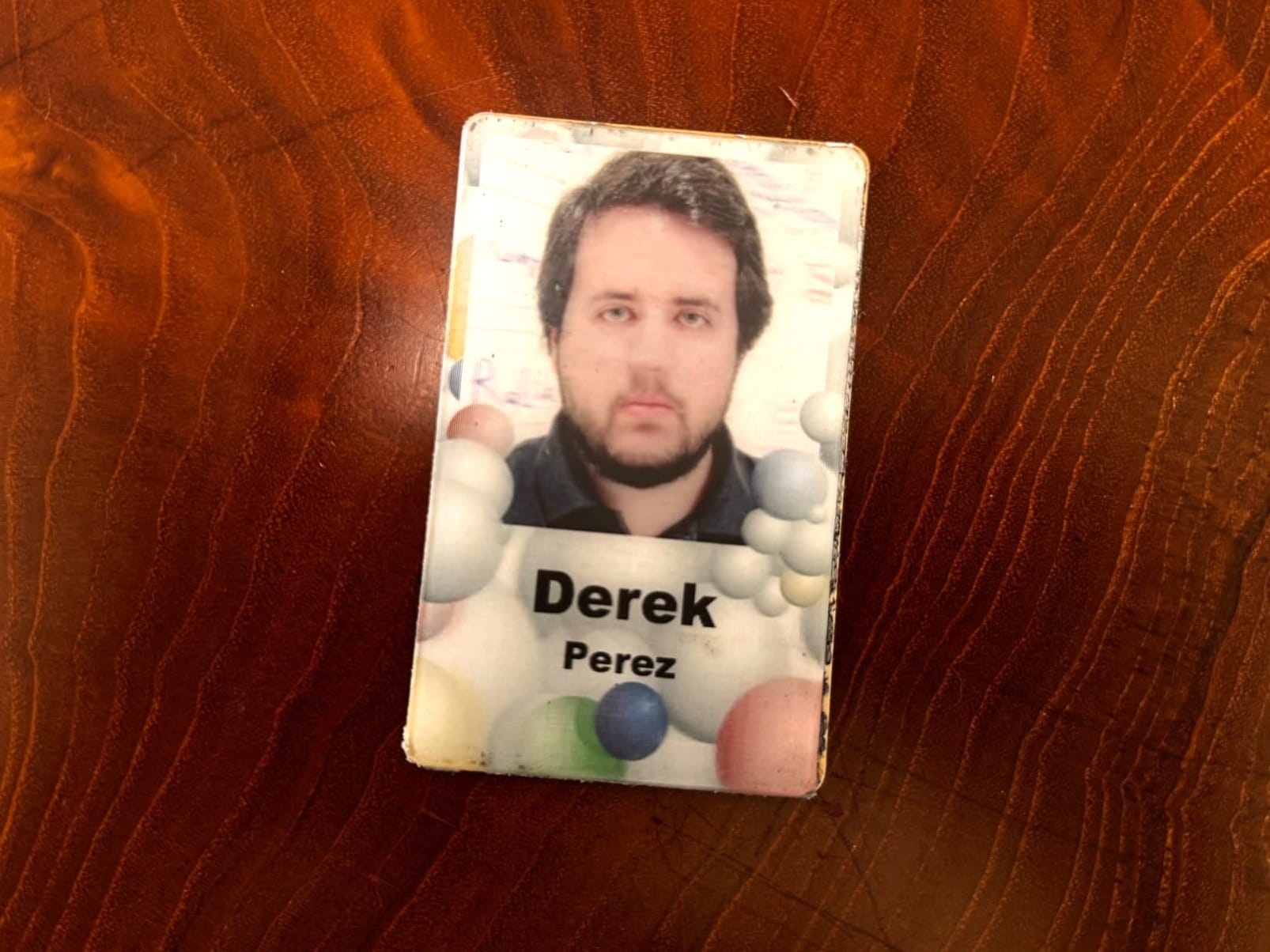
Still, by the time I left, the "golden shackles" of enterprise-grade corporate politics were loosening each day. Google was fumbling the AI ball with what they called "Bard" at the time. The internal culture wasn't enthusiastic about AI adoption, not even using our own platforms. I recall needing "legal approval" to use a classifier to triage bugs. This was the last straw.
This didn't square with everything I could plainly see unfolding outside Google's Tech Island. After my daughter was born, I parted ways with a company that regrettably no longer resembled the one I'd joined so enthusiastically in 2013.
Two things have become clear to me since:
- I had zero clue how rapidly the software engineering field would shift beneath my feet. In a year's time, I've become convinced that the AI 2027 predictions are likely too conservative.
- The market value of the skills I've invested heavily in is changing rapidly. For the record, I believe most recent waves of layoffs aren't actually caused by AI; it's a convenient omission that many companies overhired and became bloated during the pandemic. However, a growing chunk of them are certainly attributable to AI's perceived potential rather than its actual performance. I believe this red-herring trend will continue.
Given that context, Marshall Goldsmith's wisdom keeps returning to me: what got you here won't get you there.
Unapologetically, here's where I am today:
I cannot stomach the idea of working for a "conventional" organization in the post-agentic era, one being ravaged by the AI hype rollercoaster from the inside out and the outside in.
Frankly, I'm too feral for that to go over well for either party.
I routinely hear about the horror stories from former colleagues about cultural and operational war crimes taking place, as ostensibly the entire industry embraces technologies that are incredibly fast-moving, frighteningly underdeveloped, and/or eroding the employer/employee relationship. Don't take my word for it, listen to Scott Breitenother (CEO of Kilo) talk about what it's like to work there.
But I do believe there have been meaningful advancements driven by AI and the subsequent agentic era that will have a lasting, positive impact on the craft of software engineering.
I spent much of 2025 returning to first principles with a beginner's mind, experiencing cycles of ego-death, and coming out the other side with an opinionated perspective on where and how the future will look.
I'm interested in these opportunities because, at its core, it's about enabling talented teams to do more with less. I can deploy my deep entrepreneurial knowledge and expertise with cutting-edge AI to support service firms while meeting them and their business where they are.
This time, I'm not watching from the sidelines. I'm building for it.
About the author

Derek Perez is the Founder & Principal Technologist of Limbic Systems, a software consultancy that partners with organizations to design and deploy AI-native software and systems — without losing the human judgment that keeps them grounded. After over a decade of hands-on experience building startups and leading high-performing teams at Google, he partners with founders and operators who need both technical depth and business acumen to navigate what's next. Find him on LinkedIn and Bluesky, or by email: [email protected].